
Vea también


 12.10.2026 04:37 AM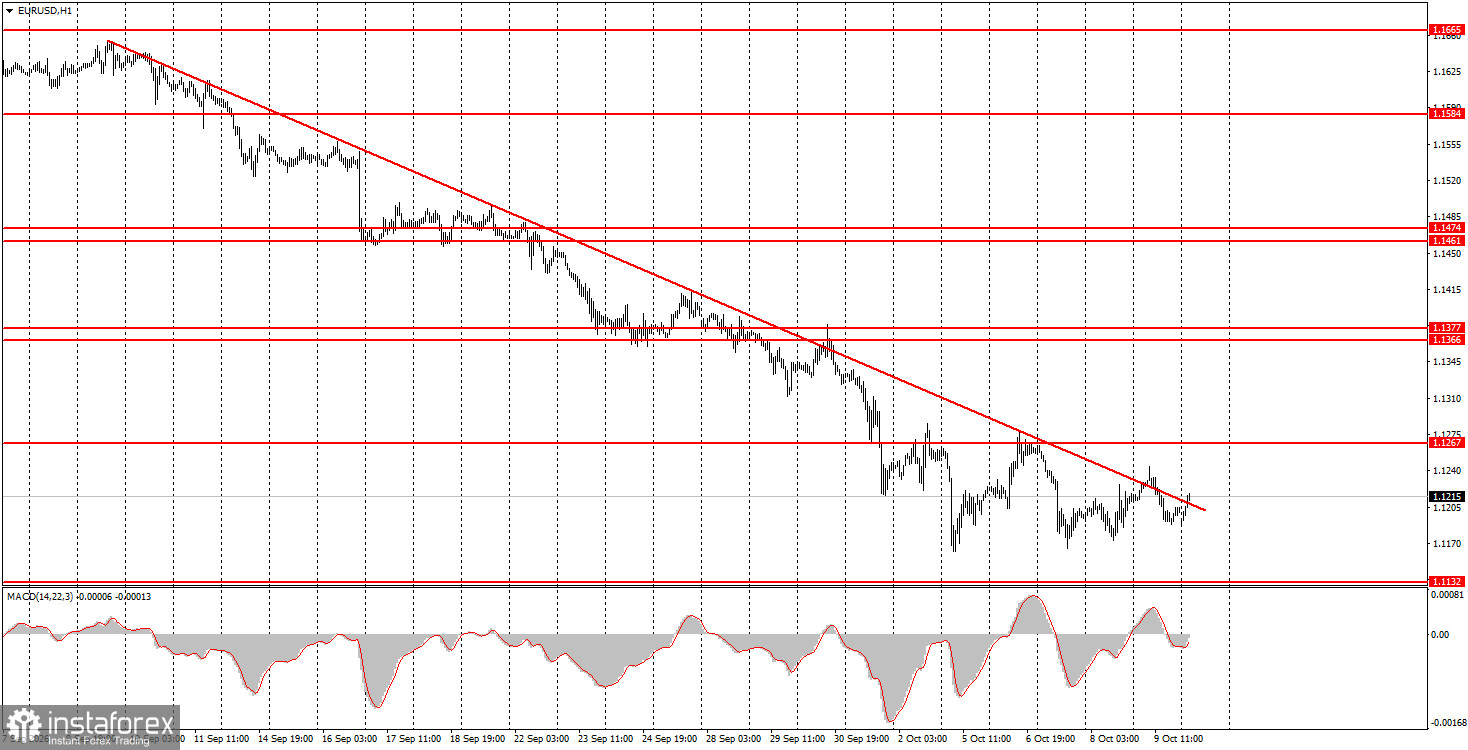
No macroeconomic releases are scheduled for Monday. Therefore, we face a boring Monday and are unlikely to see any interesting moves. Over the weekend, Donald Trump once again attempted to end the conflict between Ukraine and Russia by declaring an energy truce, which he primarily needs himself to lower fuel and oil prices that he himself provoked with the war in Iran. However, markets are not reacting to the "end of the conflict," and Kyiv and Moscow have said they are hearing about the truce for the first time.
Among Monday's fundamental events are speeches by European Central Bank representative Boris Vujcic, Bank of England representatives Sarah Breeden and Catherine Mann, and Federal Reserve representative Beth Hammack. However, recall that the monetary outlook of all three central banks currently raises no questions and exerts no influence on trader sentiment. All three central banks will likely deliver one round of monetary tightening each before year-end, putting the euro, the pound, and the dollar on equal footing. Yet they were already practically equal earlier, and the euro should not have fallen for an entire month simply because the ECB is conducting a somewhat tougher "hawkish" policy than the Fed. Therefore, speeches by central banks' representatives are unlikely to affect FX market movements.
The geopolitical backdrop still leaves much to be desired. The US and Iran are not conducting official talks at this time, although Donald Trump continues to insist that a deal could be signed after the US Congressional elections. Trump also repeatedly claims that the conflict between Ukraine and Russia could end very soon — a claim he has been making for almost two years. Thus, the market has no faith in such rosy developments. Over the weekend, Trump again changed his rhetoric toward Iran and stated that after the Congressional elections he may resume military pressure. He also announced an energy truce between Kyiv and Moscow, which no one in Kyiv or Moscow had heard about. Classic.
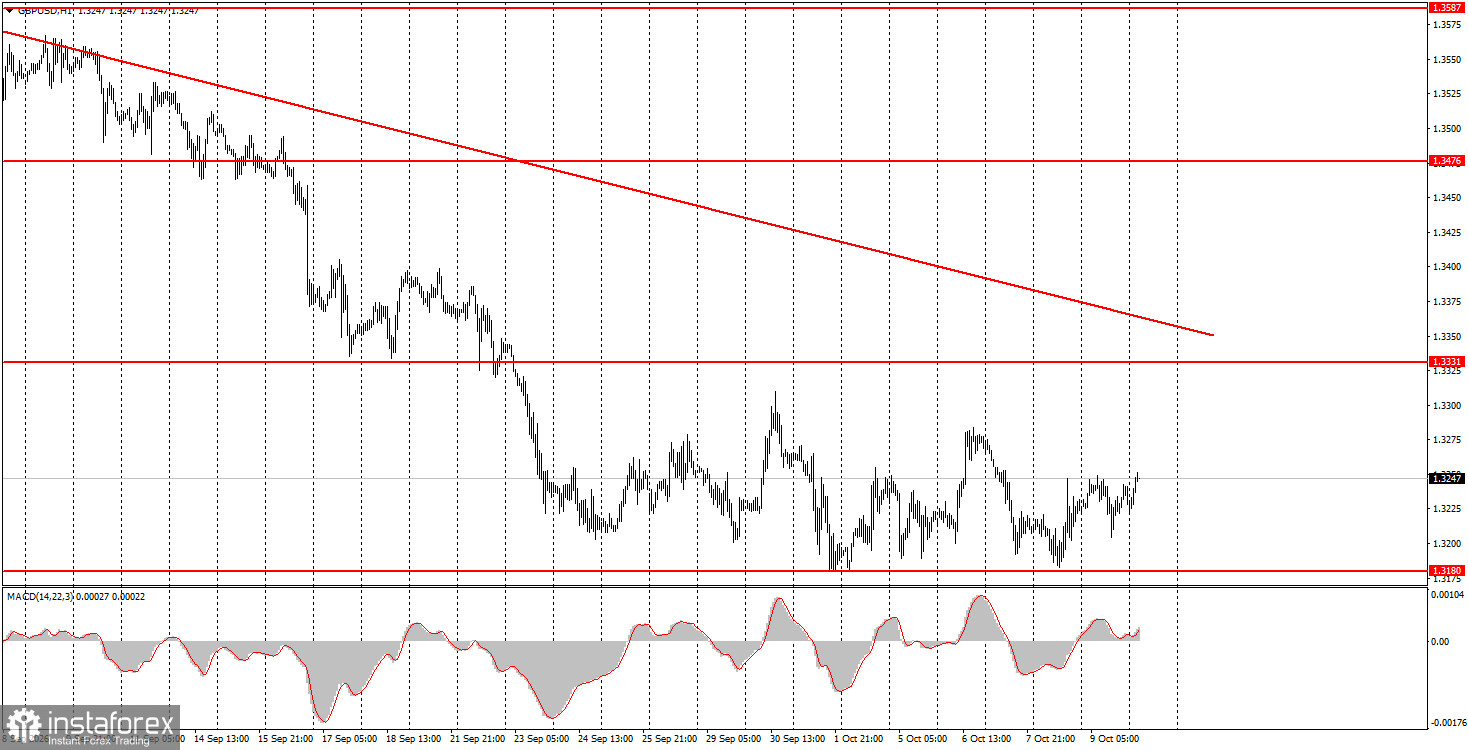
On the first trading day of the week, currency pairs may continue to make sluggish correction attempts, since expecting more is difficult now. The euro can be traded today from the 1.1198–1.1218 area, and the pound sterling from the 1.3259–1.3267 area. Volatility today may be low.
Price levels (areas) of support and resistance serve as targets for opening buy or sell trades or as sources of signals.
Red lines indicate channels or trend lines that show the current trend and the preferred trading direction.
The MACD indicator (14,22,3) — the histogram and signal line — is an auxiliary indicator that can also provide signals.
Important speeches and reports (listed in the news calendar) can significantly influence currency pair movements. Therefore, during their release, traders should approach trading with utmost caution, or exit the market to avoid sudden reversals against the preceding move.
Beginner forex traders should remember that not every trade can be profitable. Developing a clear strategy and practicing money management are key to long-term success in trading.


