
یہ بھی دیکھیں


 20.10.2026 12:26 PM
The Elliott Wave structure on the 4-hour EUR/USD chart has become more complex. On the higher timeframe (bottom chart), the downward trend segment has taken the form of a five-wave structure labeled A-B-C-D-E. This structure could be completed at any time, as it appears sufficiently developed. All the waves in this segment are approximately equal in size, which is why it is considered corrective. If this assumption is correct, a new impulsive upward trend segment will begin once the correction is complete, with targets well above the 1.2000 level.
On the lower timeframe (top chart), an impulsive wave sequence is still developing and may belong to wave E of the higher timeframe. If this is indeed the case, the dollar's strengthening is nearing its end, regardless of how much further it rises. The presumed wave 5 of E is either complete or close to completion. In either case, the current wave structure suggests that the downward wave sequence is nearing completion on both charts. News developments and a sharp shift in market sentiment have driven a strong rally in the US dollar, but the number of new reasons for further dollar appreciation is gradually diminishing.
Unrest in France Halts Euro Buyers
EUR/USD fell by 25 basis points on Monday, a very small decline. At present, the baseline scenario remains a new upward trend segment. There are no clear factors that would prevent this scenario from unfolding, although unexpected events can occur at any time and dramatically change market conditions.
On the first trading day of the week, market participants spent more time discussing developments than trading. Many fear that the riots and protests in France could spread to other European Union countries, as several of them face similar budgetary problems. It is worth recalling that the French initially launched mass strikes and protests, which gradually escalated into widespread rioting and looting, in response to Paris's plans to raise taxes and cut public spending, particularly on education and social programs. In simple terms, under the proposed budget, French citizens would pay more while receiving less government assistance. Naturally, these prospects were unacceptable to most French residents, triggering the unrest.
However, in this assessment, the euro should not react significantly to such events. Similar incidents occur periodically in many countries around the world. For example, another series of "No Kings" protests against Donald Trump is taking place in the United States. The market can, of course, continue buying the dollar for almost any reason, and the crisis in France could serve as another justification. Nevertheless, a continued decline in the euro and further appreciation of the dollar are not expected. The US dollar already faces several challenges, and Donald Trump is unlikely to welcome a stronger dollar, which makes US exports less competitive. The wave structure pointing to a prolonged euro rally is expected to continue unfolding. Something more significant than widespread unrest in France would be needed to trigger another sustained rise in the dollar.
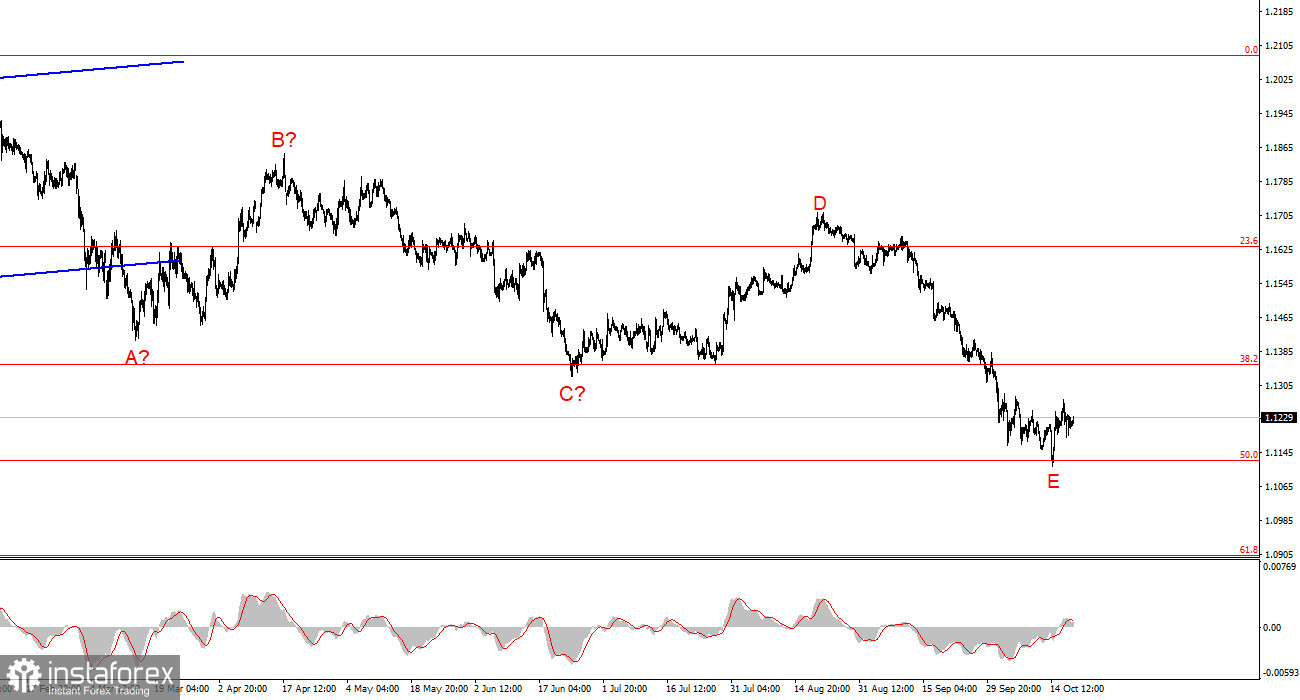
Based on the EUR/USD analysis, the pair remains within the global corrective trend structure A-B-C-D-E. However, this structure appears fully developed and may therefore be complete. At this stage, conditions appear favorable not only for buying the euro but also for anticipating a sustained upward trend segment. According to the higher timeframe, the pair could rise to at least the 1.1700–1.1800 level. The failed attempt to break below 1.1126, corresponding to the 50.0% Fibonacci retracement level (bottom chart, higher timeframe), also suggests that the market may be ready to move higher.
The higher timeframe shows a downward trend segment that has taken the form of an A-B-C-D-E structure. The internal wave structure of wave E has developed into a five-wave impulse pattern, which may already be complete. If this assumption is correct, a new upward trend segment will begin to form.
Key Principles of This Analysis:


